Crystal Hunting in Namibia
While our inventory is currently anchored in Stefan's collection, we wanted to establish relationships and purchase straight from the source. Rather than starting from scratch in e.g. Colombia or Brazil, we reached out to our existing network. Namibia quickly emerged as the most promising destination for our first sourcing trip, and ten days on the ground gave me a solid first look at the country and its most significant mineral deposits.
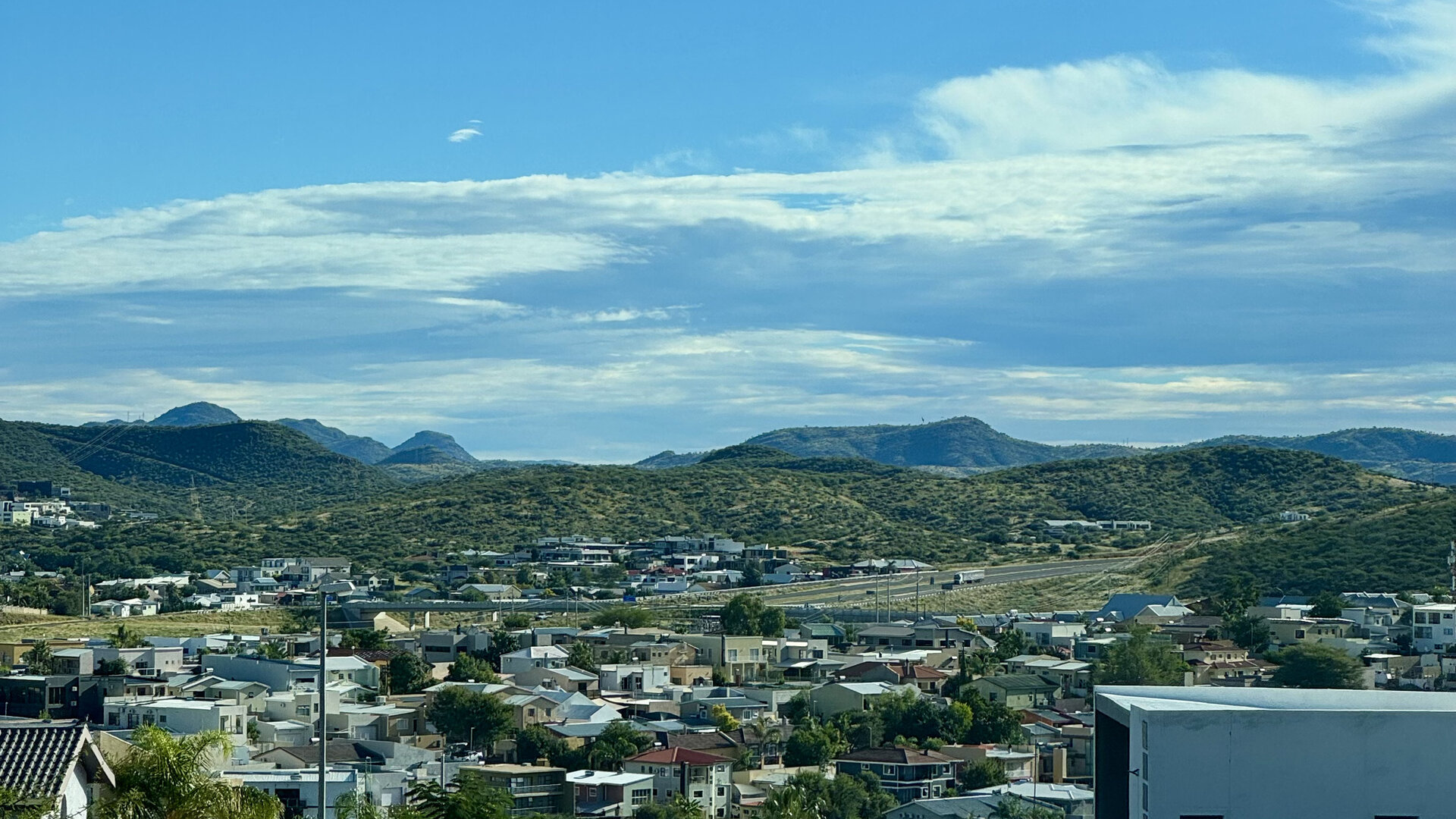
My first day in Windhoek was all about laying the groundwork. I linked up with Andi Bachran, a part-time tour guide with third-generation roots in the Namibian mineral trade. He knows every back road and every miner worth talking to in this country. Under his guidance, we spent the morning on practicalities—stocking up on cash for on-site deals, loading food supplies, and filling every tank to the brim. The distances between Namibian localities are vast, and running dry halfway to a mine is not an option.
The afternoon shifted to something more spectacular. Andi took me to see the private collection of Hans Soltau, one of Namibia's most celebrated mineral collectors. I cannot share any photographs—what I saw remains behind closed doors—but the quality speaks for itself. Soltau's Fluorites, in particular, are world-class: vibrant, pristine, and among the finest examples I have ever encountered. It was a powerful reminder of exactly what Namibia is capable of producing.
First road-trip day — Visiting a Tourmaline mine near Usakos.
After a three-hour drive, we reached Usakos, where Andi took me to Jaco, who operates a tourmaline mine.
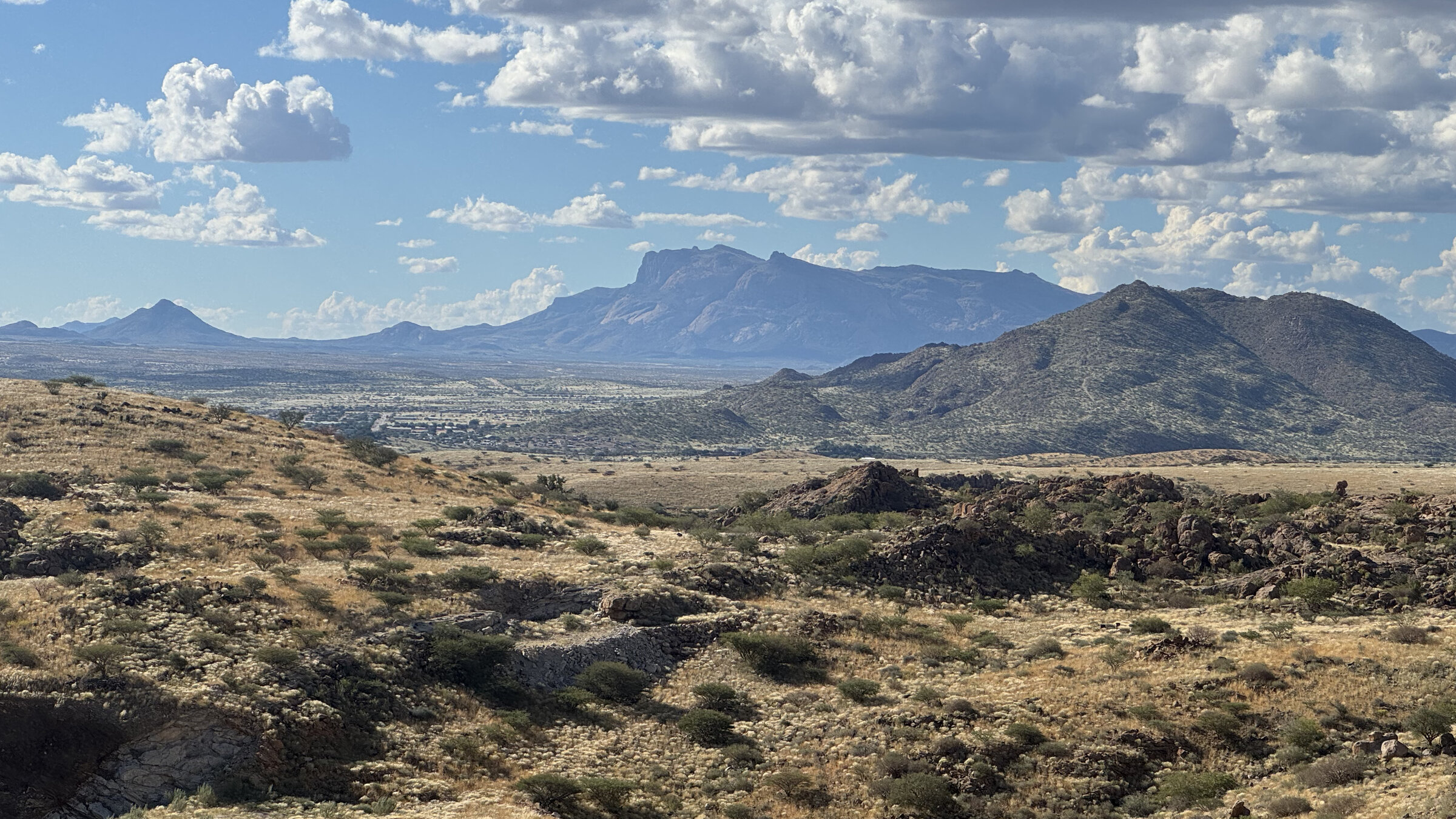
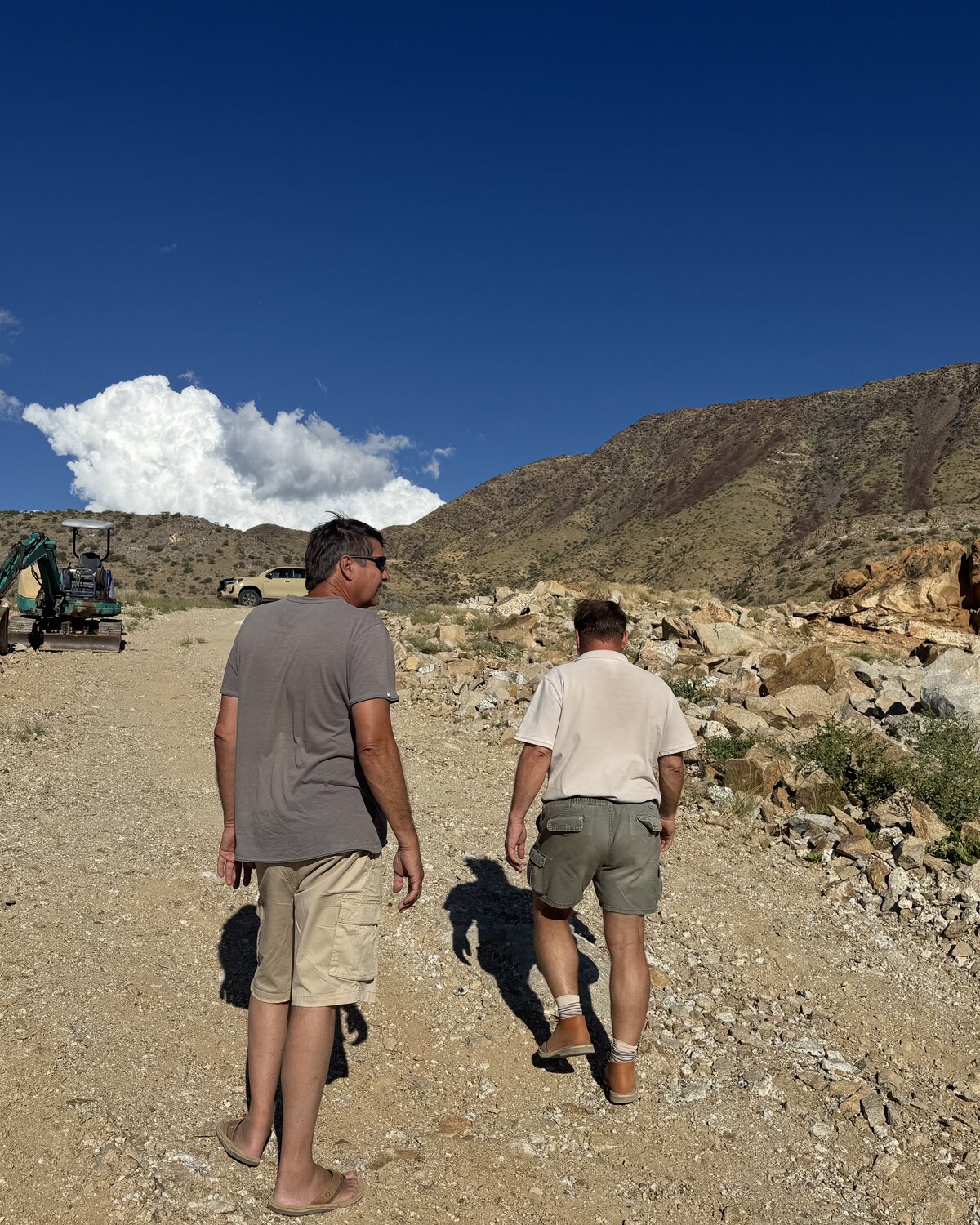
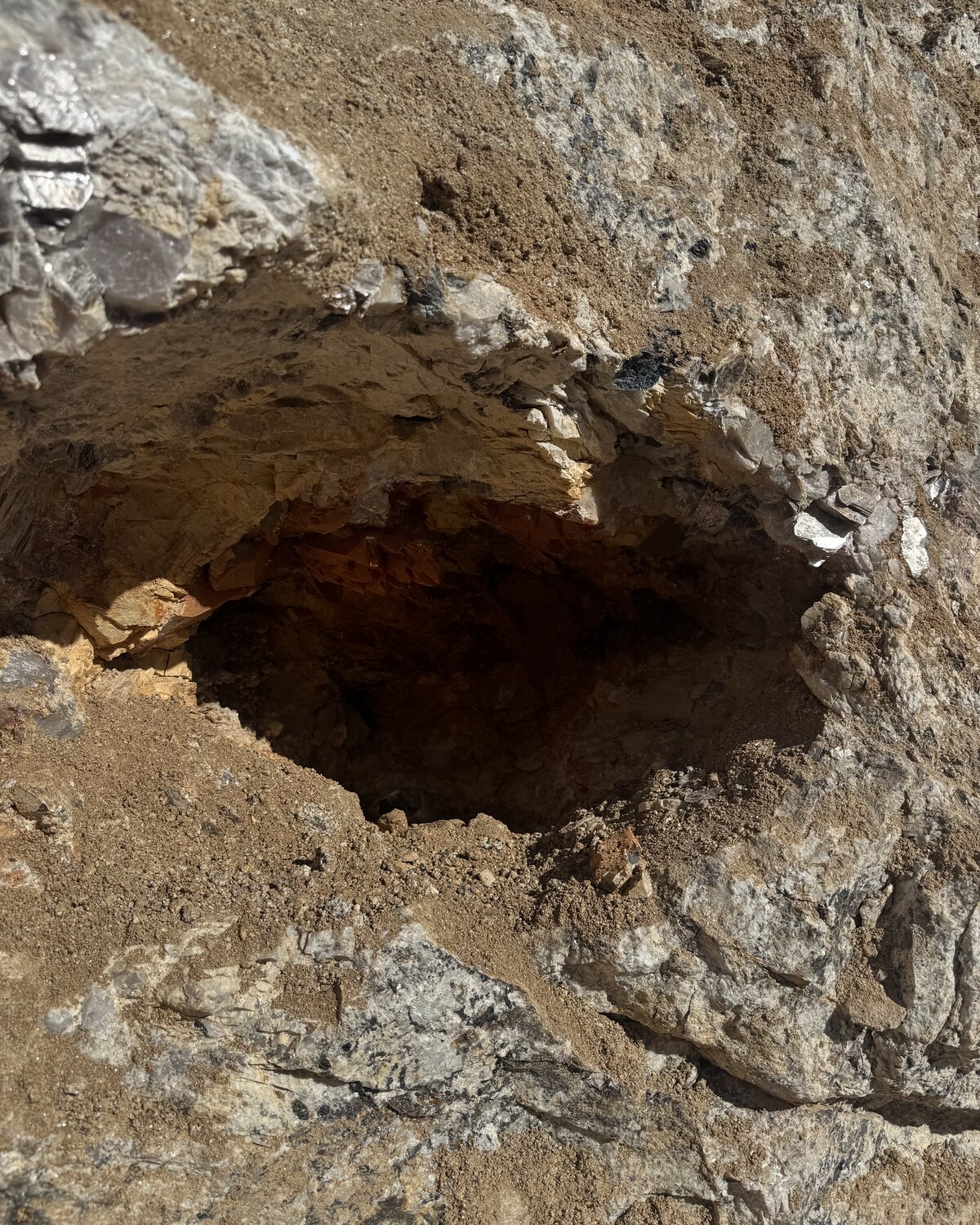
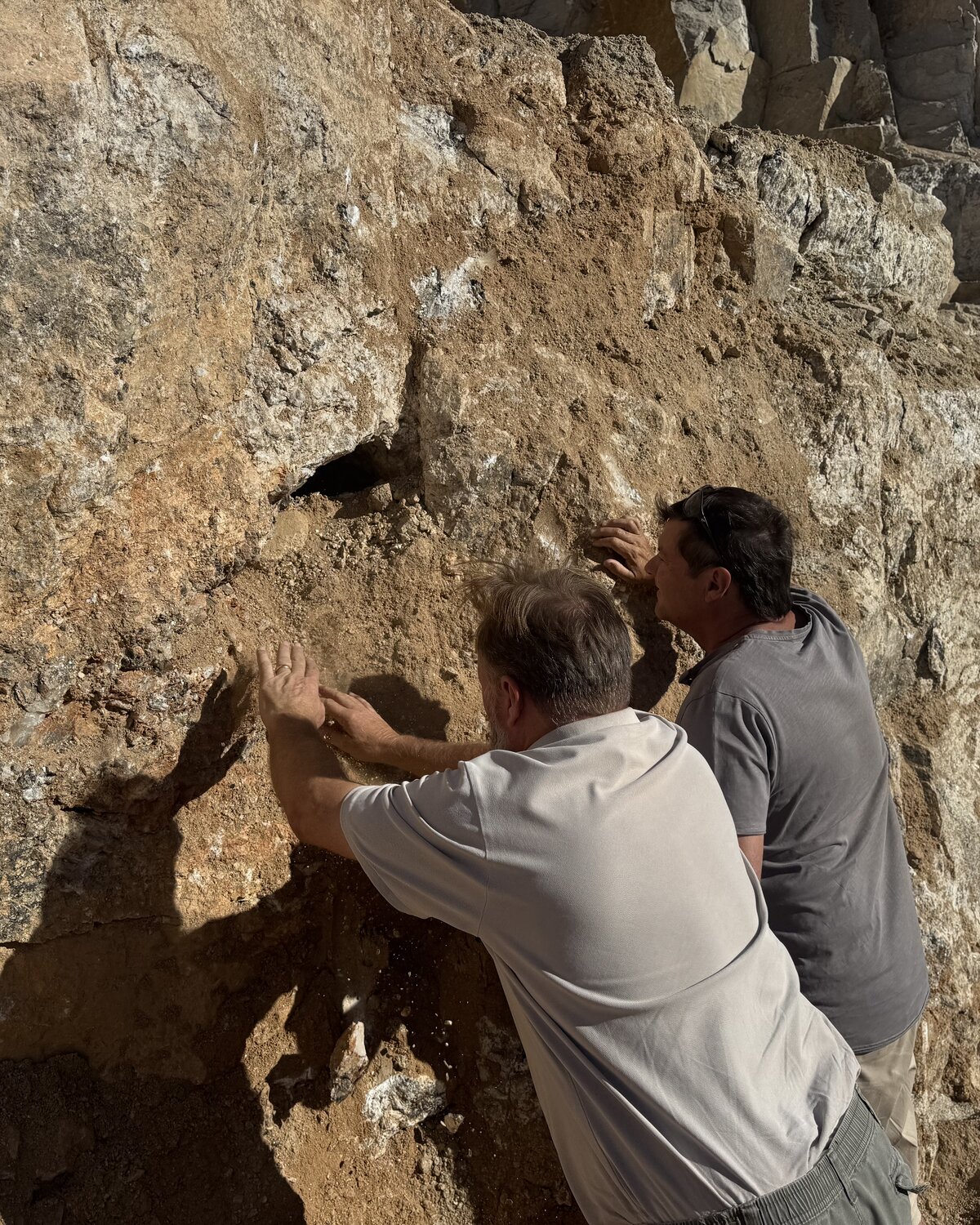
The mine has been operating for roughly a year now, yielding mostly small stones for cutting material. Occasionally, large single crystals pop out as well. In the two bottom pictures, you can see a pocket, where the tourmalines sit and are being extracted. Operating the mine requires heavy machinery and use of explosives.
Second road-trip day — Artisanal miners & Spitzkoppe.
Leaving behind Usakos, we were on our way to the Spitzkoppe, a famous locality for Topaz, Amethyst, and Japan-Law Quartz twins. On the way, there is a local mineral market with approximately thirty vendors that mostly sell mid-to-low grade material. I bought several lots of Amethyst to have quick-running items for gem shows. Prices were very fair, so I decided to load up!
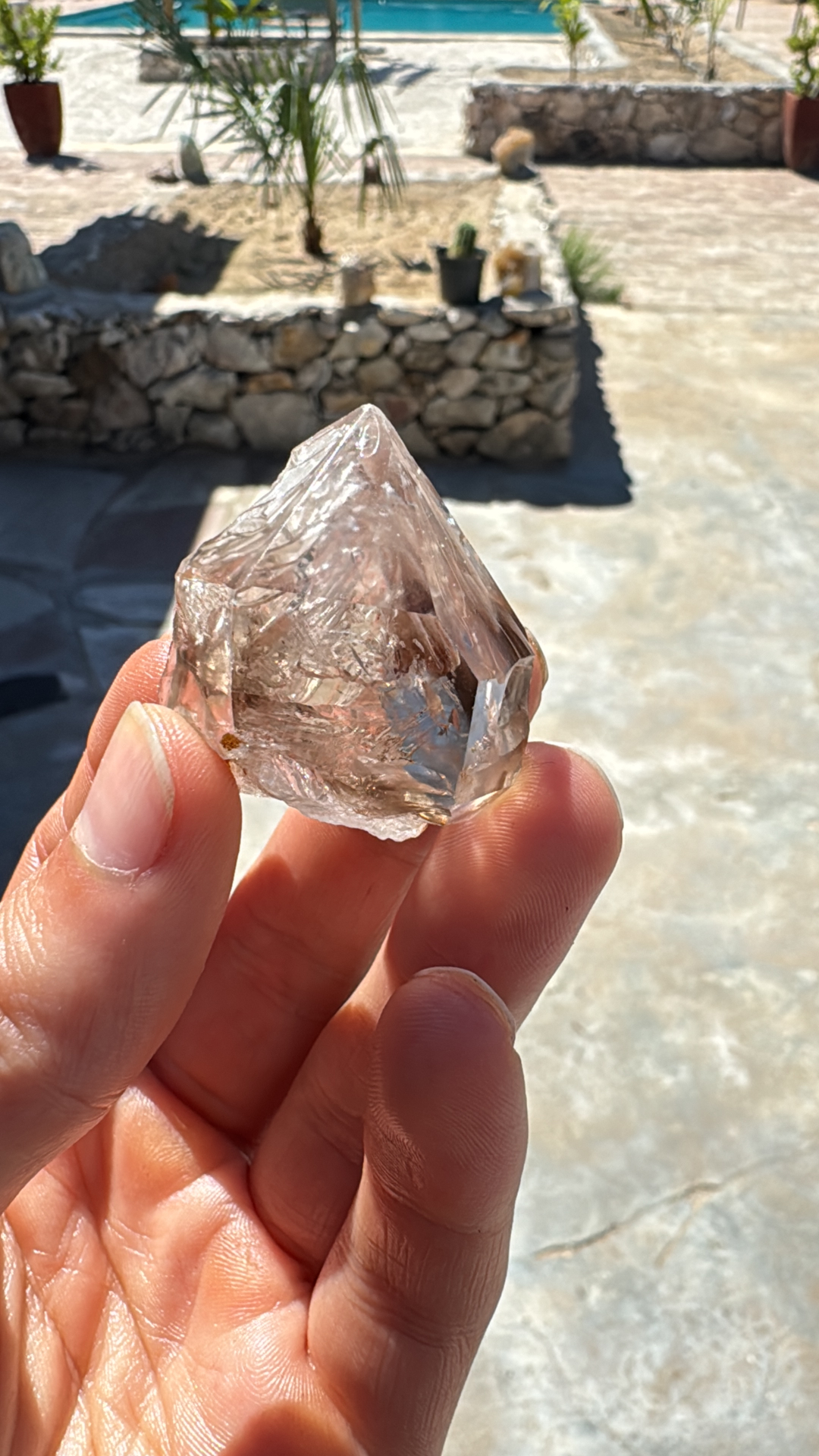
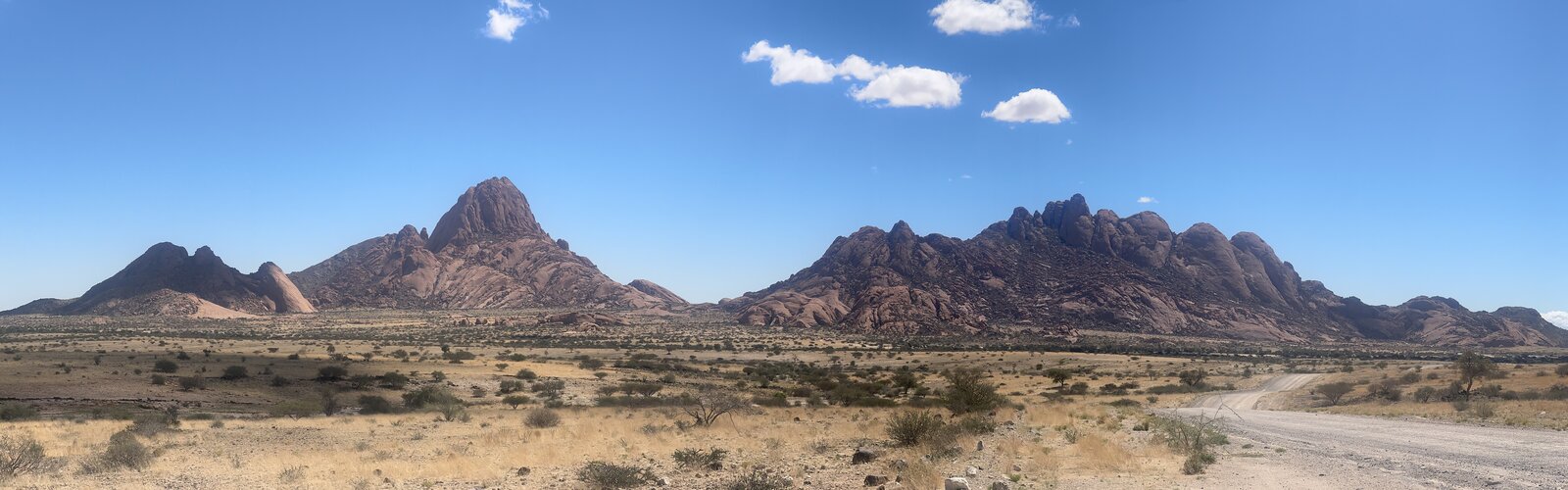
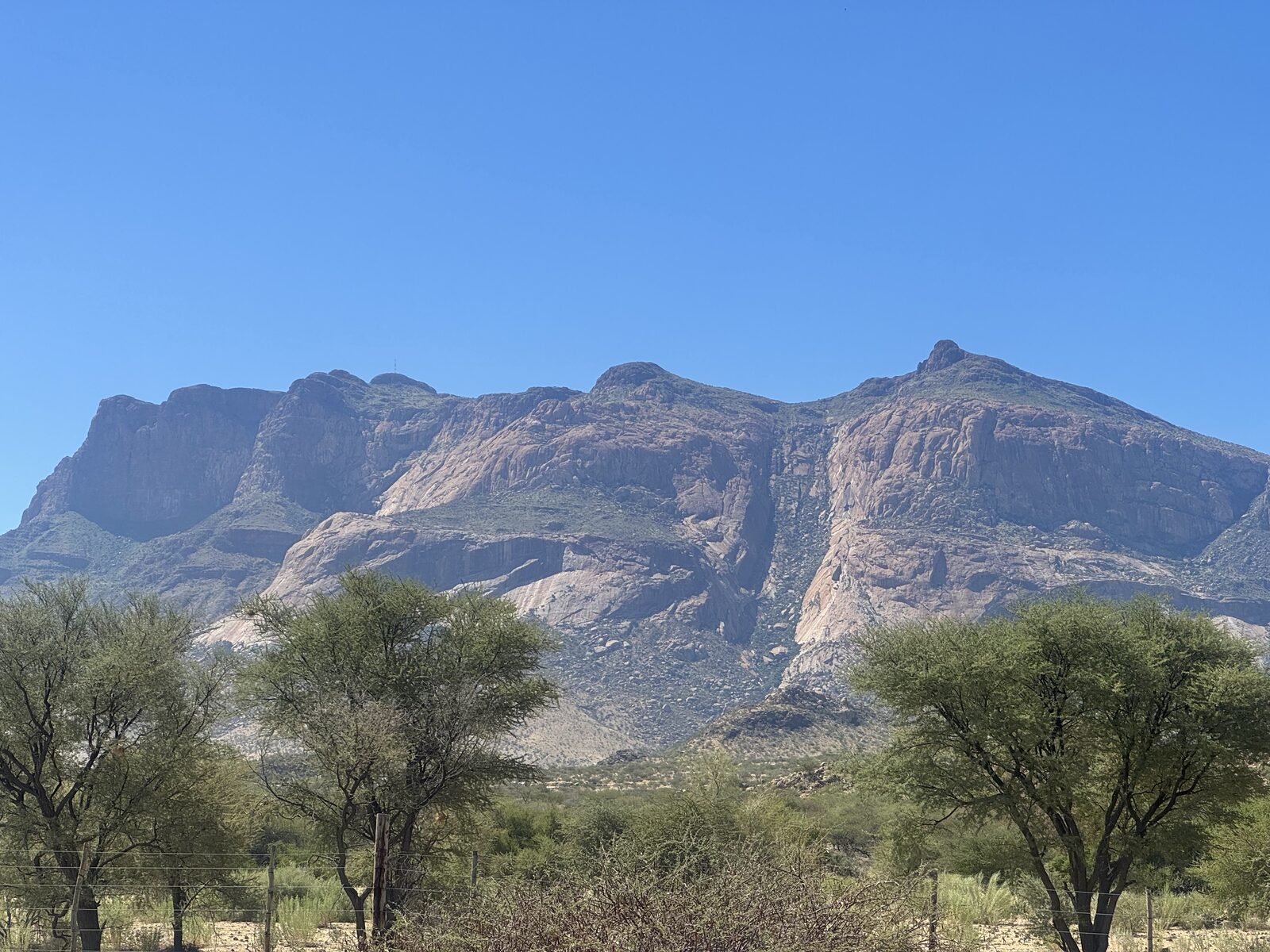
Later that day we drove to the Spitzkoppe, a dramatic granite formation rising out of the desert plain. Known as the 'Matterhorn of Namibia,' the peak has been a landmark for centuries and a spiritual site for local communities. Its sheer walls and bizarre rock shapes are a direct result of millions of years of weathering on exposed granite. Scattered around the base are ancient Bushman rock paintings, some dating back thousands of years—quiet reminders that people have sought meaning in this landscape long before minerals became the main attraction.
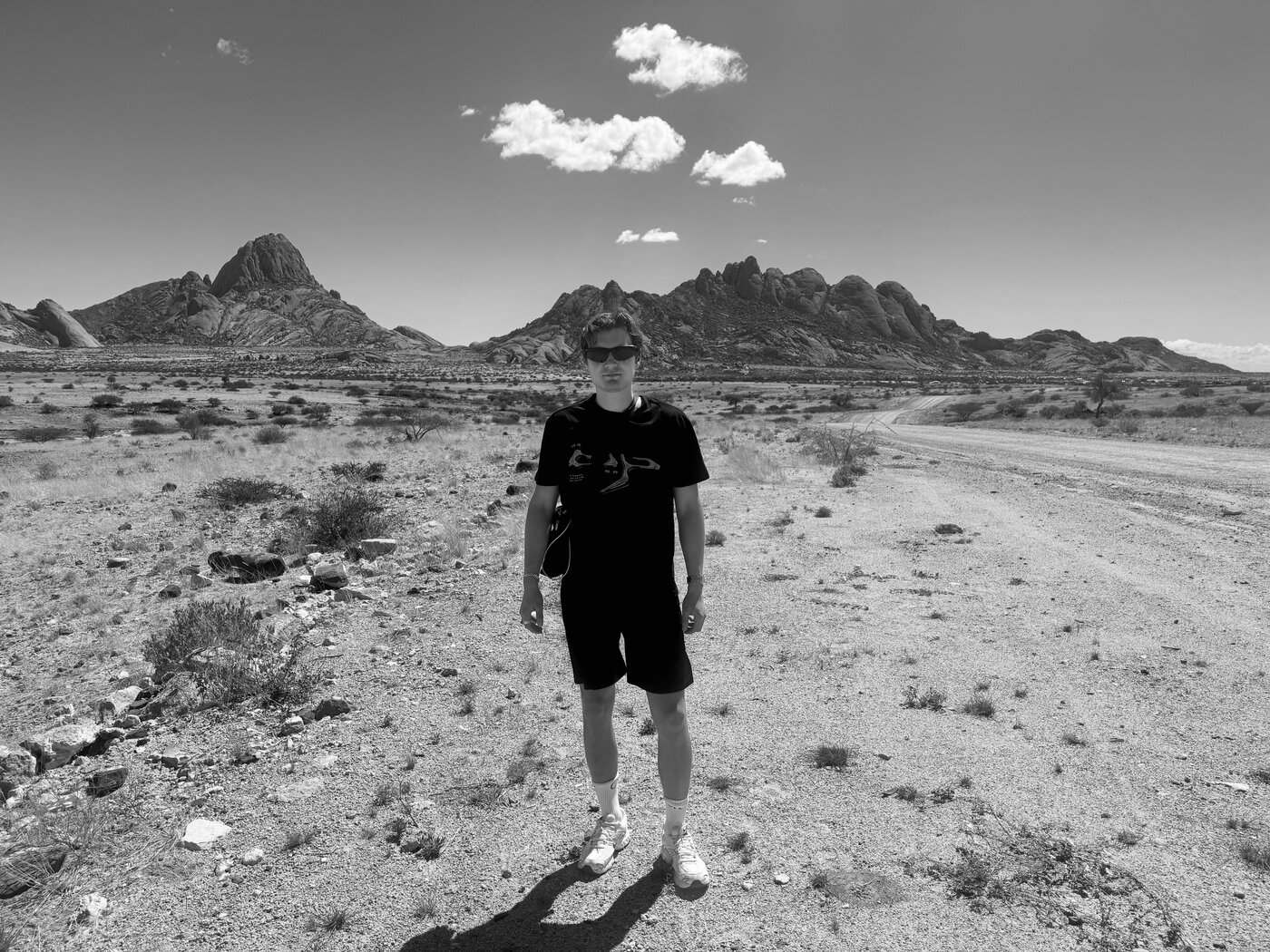
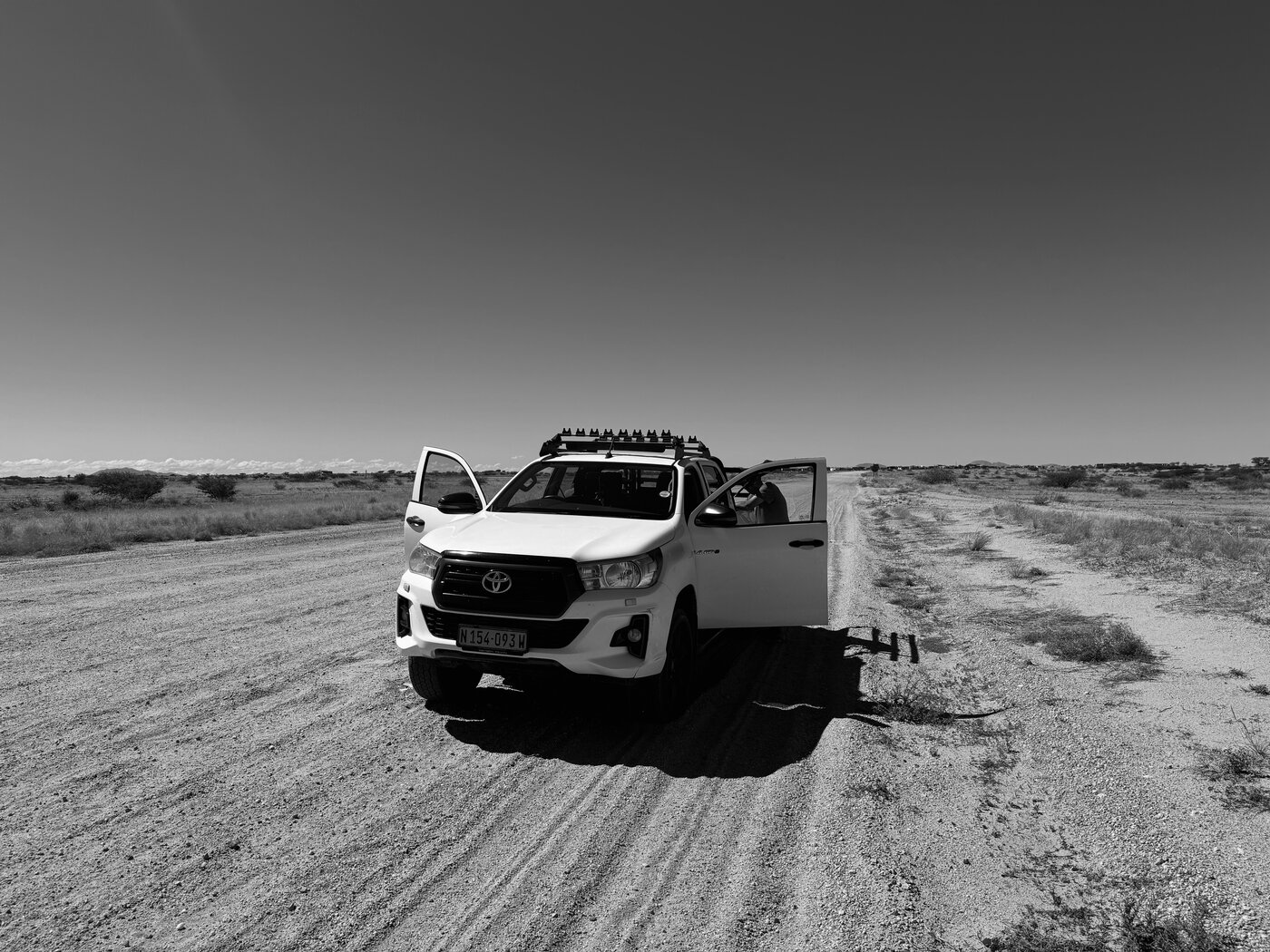
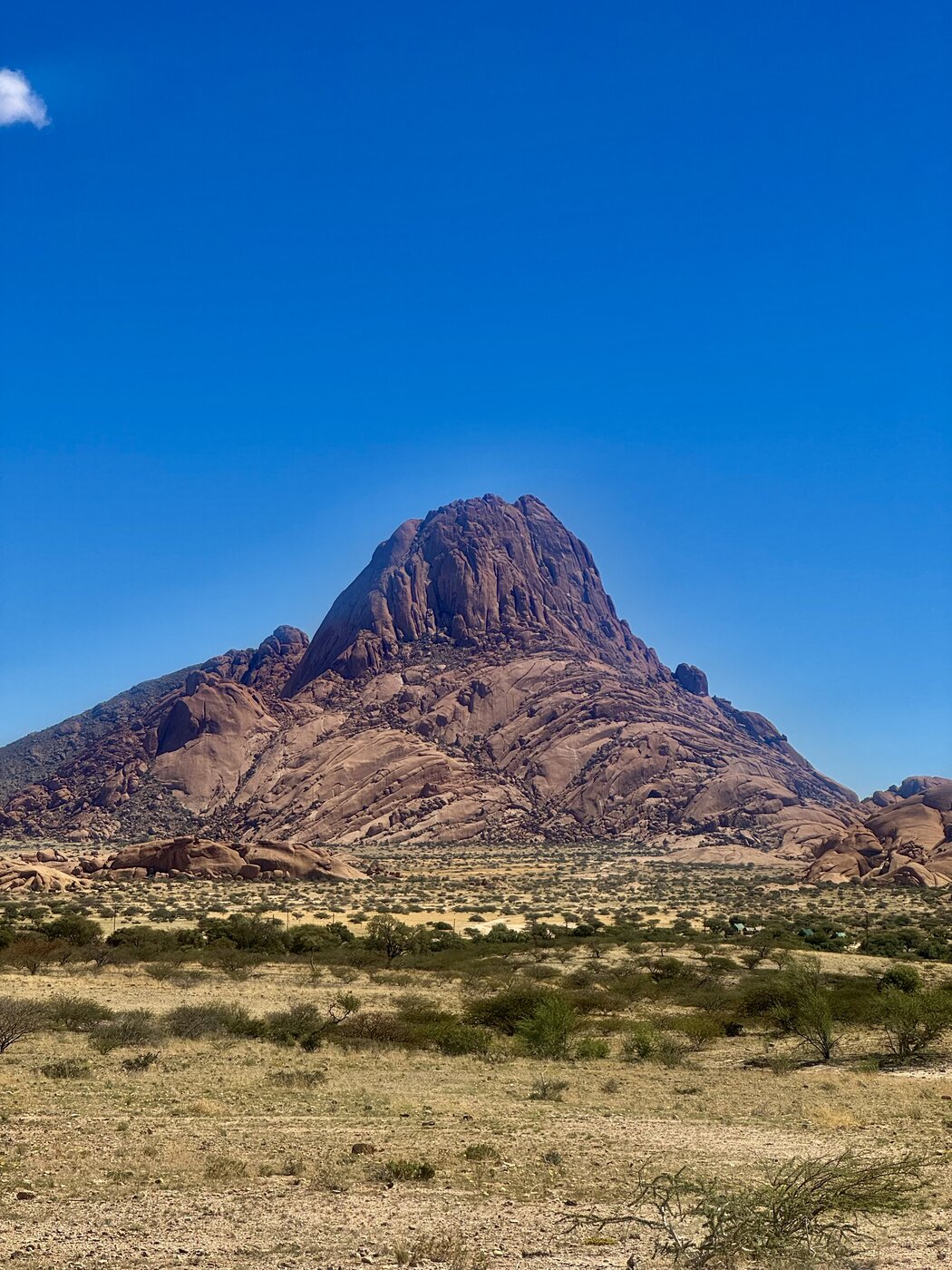
At the Spitzkoppe, we hardly found any miners that day. Andi purchased a Japan-Law Twin Quartz from a miner that had contacted him before, and we made our way to the Brandberg mountains for the next day, which would ultimately be the highlight of the trip.
Visiting the Brandberg area and the world-famous Goboboseb mines.
Andi and I were excited to go to the Goboboseb mines: beautiful, richly saturated Amethyst is found there, highly sought after by collectors world-wide. They often come in interesting Scepter shapes, with enhydro bubbles, and offer superior glow and saturation.
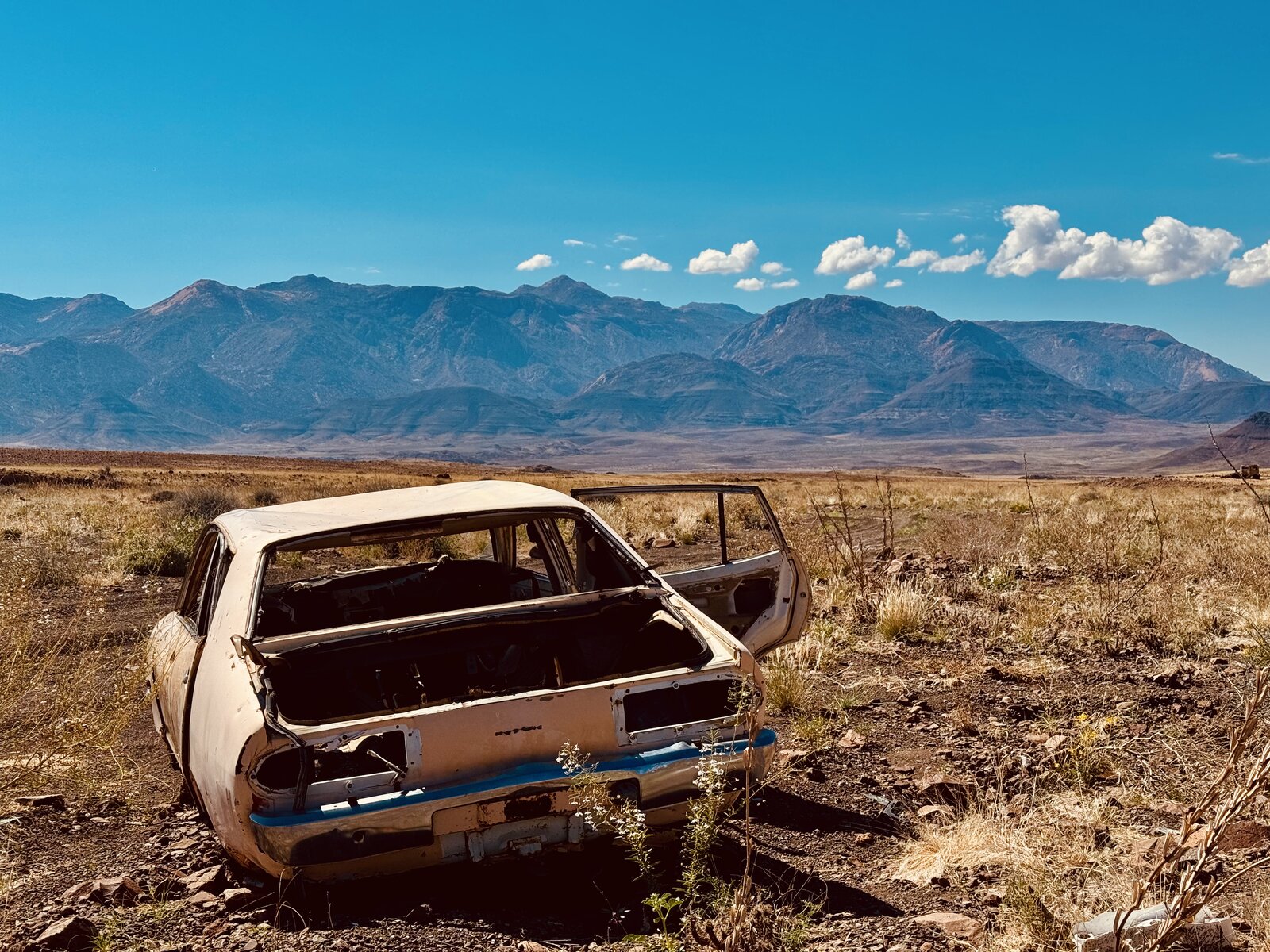
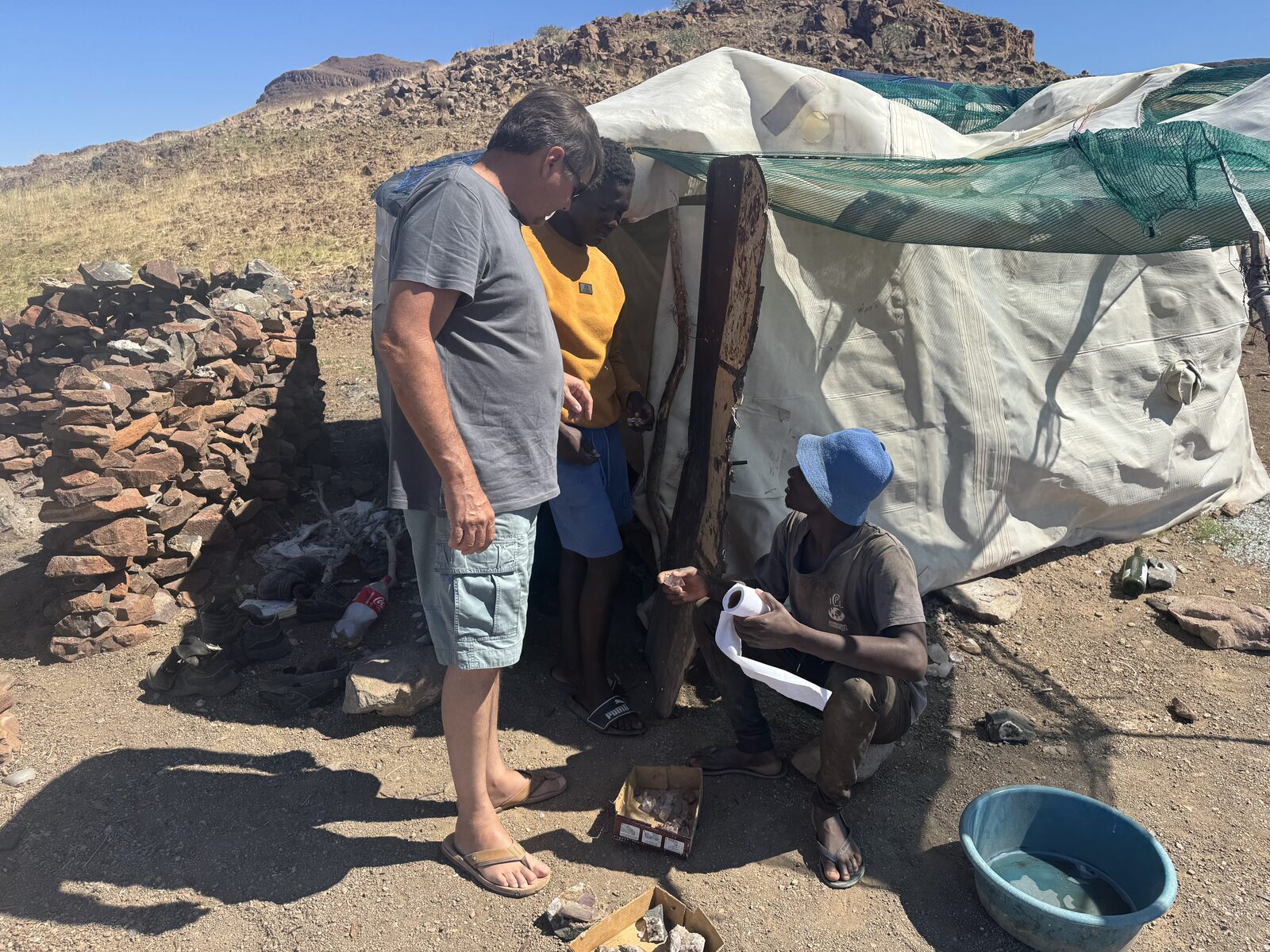
Before heading to the mines themselves, we stopped to meet with artisanal miners and look over their recent finds. The mood was sobering — most reported that they hadn't pulled out any worthwhile material in weeks. They live in simple huts pitched before the mining sites, far from any town or village. Their workday is split by the heat: they mine from early morning until noon, rest through the brutal midday hours, and head back out in the afternoon. The tools are remarkably simple — little more than a hammer and chisel, paired with the kind of practiced skill that only comes from years on the rock. The work demands resilience, yet a strong find can earn them far more than the farming work they would otherwise fall back on in the rural areas they come from.
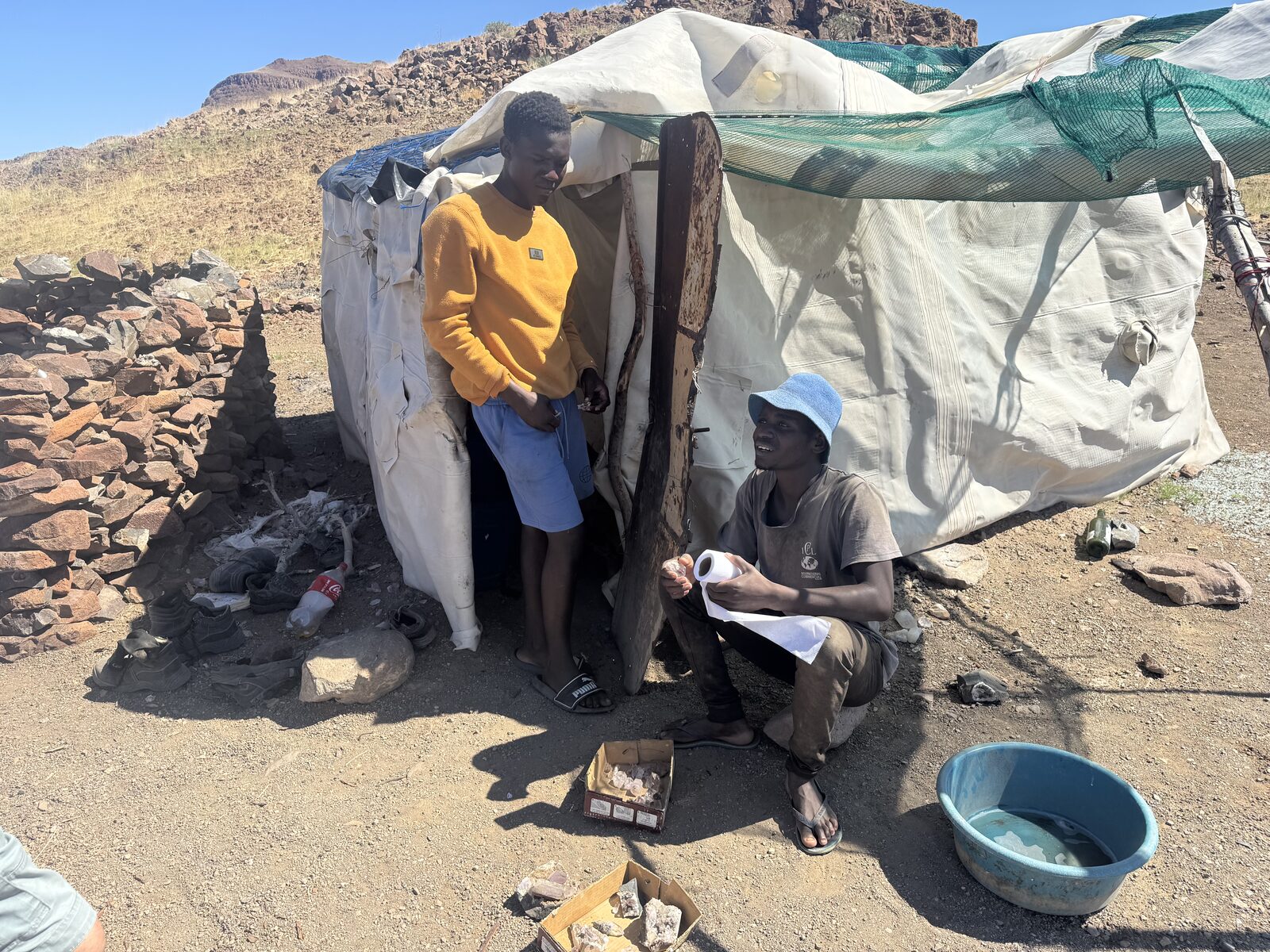
Deeper into the Gobobosep range, we reached the Streep mine.
After the midday heat subsided, we drove further into the mountains. There was a stark contrast between the work of the artisanal miners and the tools used at this mine — heavy machinery, including excavators, and the precise deployment of dynamite.
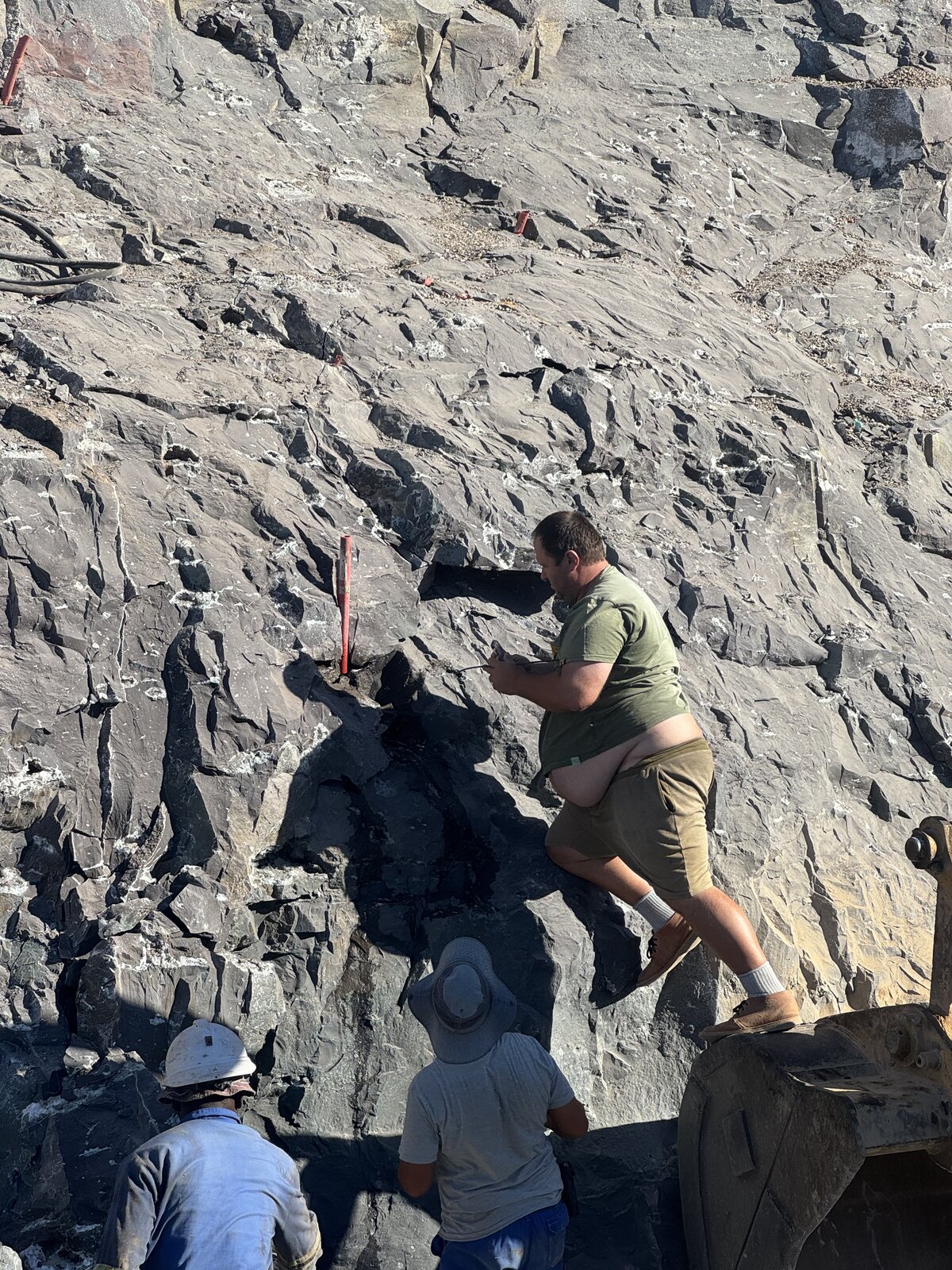
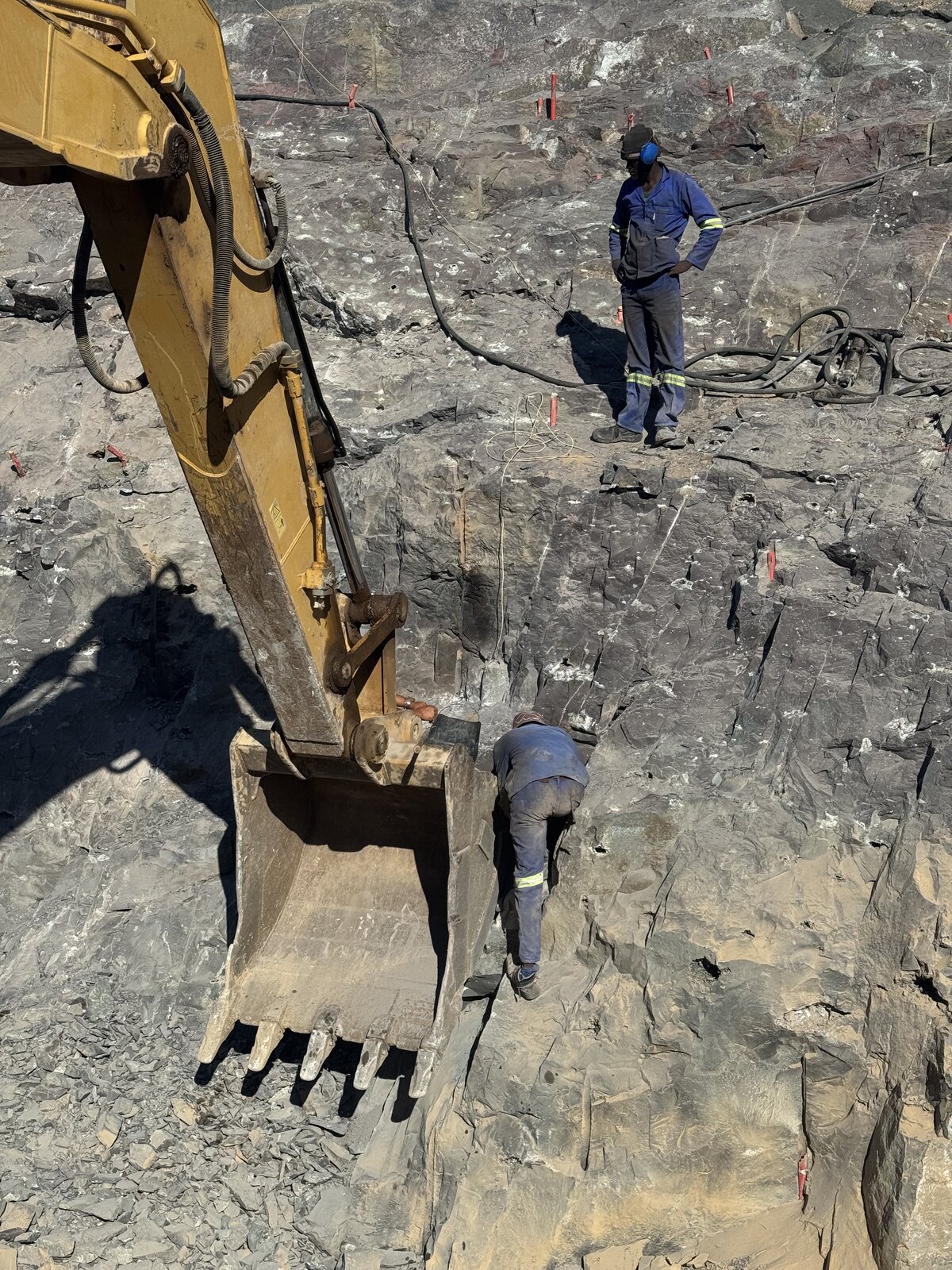
After detonation — I don't have footage of this, as it is deployed from a safe distance of around 200m due to safety reasons — the workers start looking for newly emerged pockets. The rock now being softened from the detonations can be easily moved and further extracted with the excavator.
During this detonation, a total of ten dynamite charges were deployed — each string costing roughly $50. The crystals recovered (you can see a selection in the last two videos above) yielded an estimated $600–700 in mineral value. It was not the most successful blast of the day, but the extraordinary pieces that surface here and there are what keep the operation profitable.
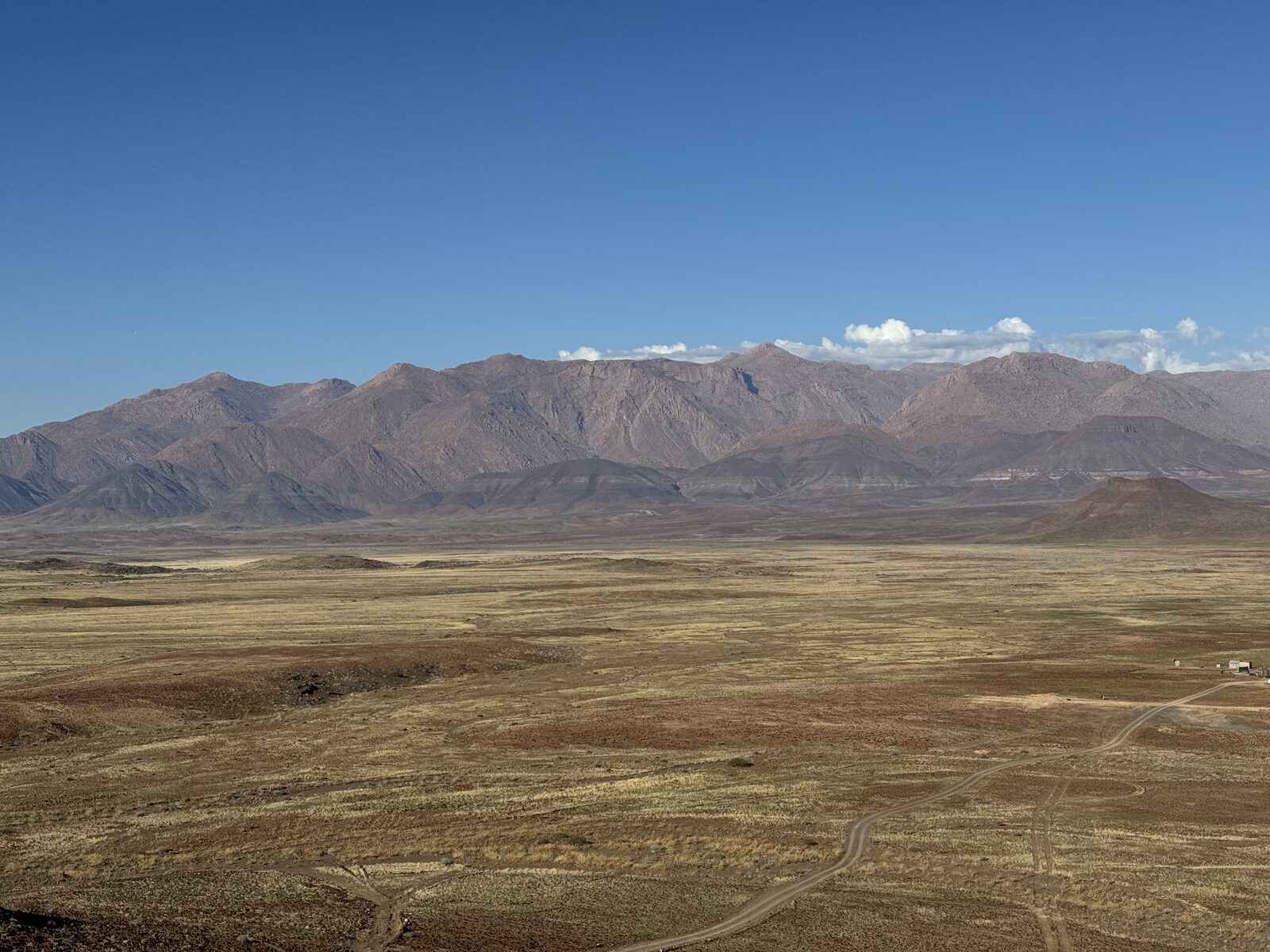
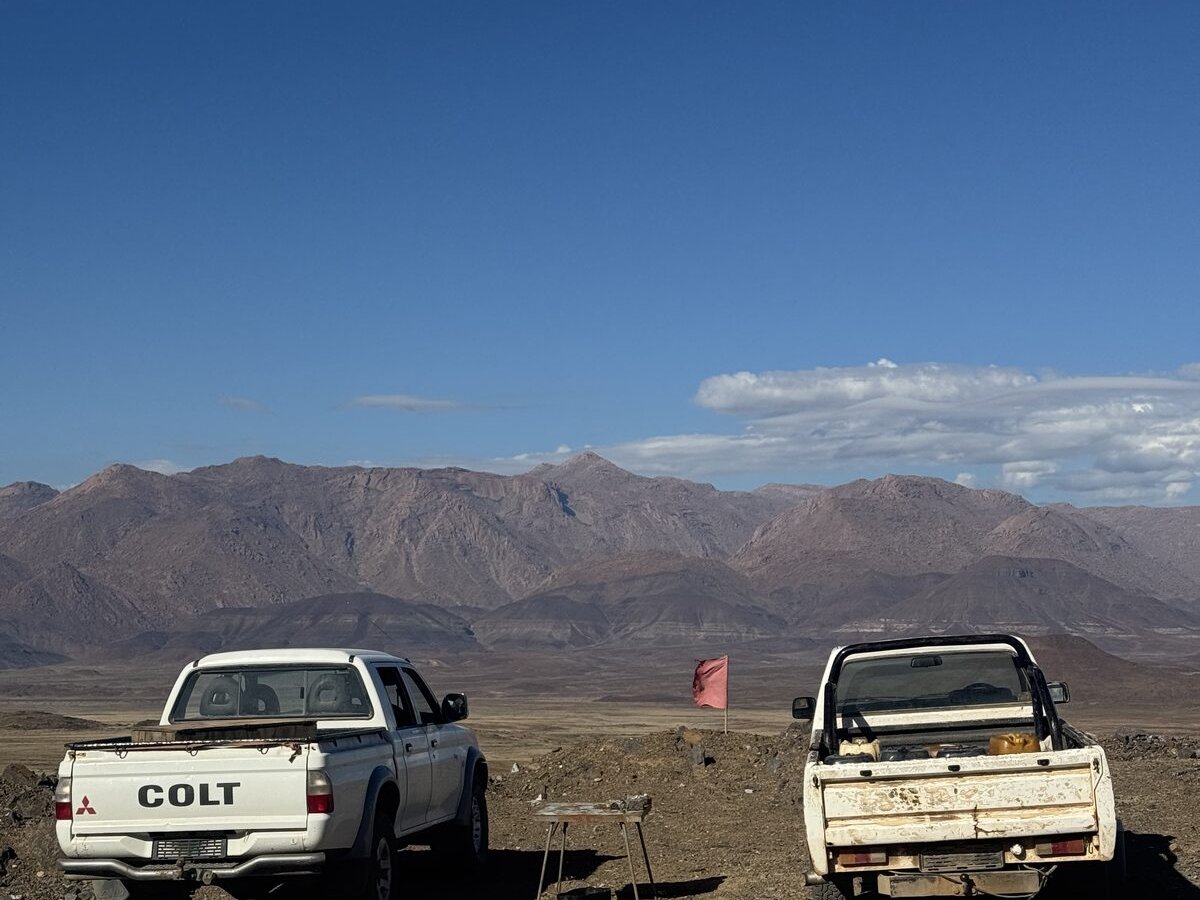
A direct purchase of newly found material at the mine was not possible — the owners maintain a waiting list of regular customers, and on-site sales are strictly forbidden. Instead, I negotiated with the artisanal miners and purchased some beautiful Amethyst and Smoky Quartz scepters from them. Having gone so long without a worthwhile find, they were holding on firmly to every piece.
Eventually, we struck a deal that worked for both sides. Below you can find two examples:
Swakopmund, Windhoek, and a prized Erongo Aquamarine.
After the trip to Goboboseb, we were finished with the on-mine visits. We headed to Swakopmund, a beautiful coastal town, and spent the weekend there. After that, we drove back to Windhoek and met up with some local collectors, where I was able to score my favorite piece of the trip: a beautiful Aquamarine with Schorl from the Erongo Mountains. See the pictures below for impressions.
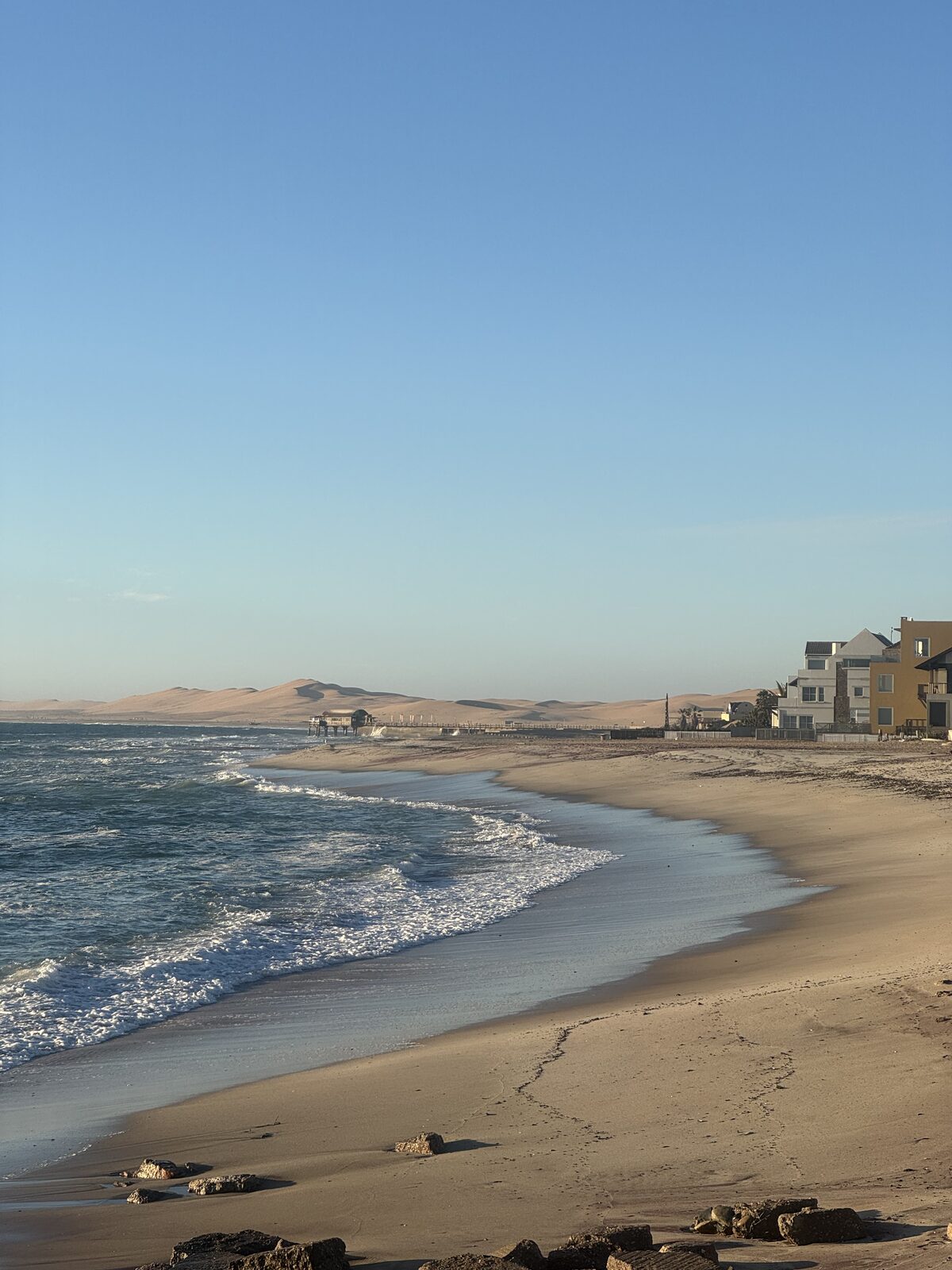
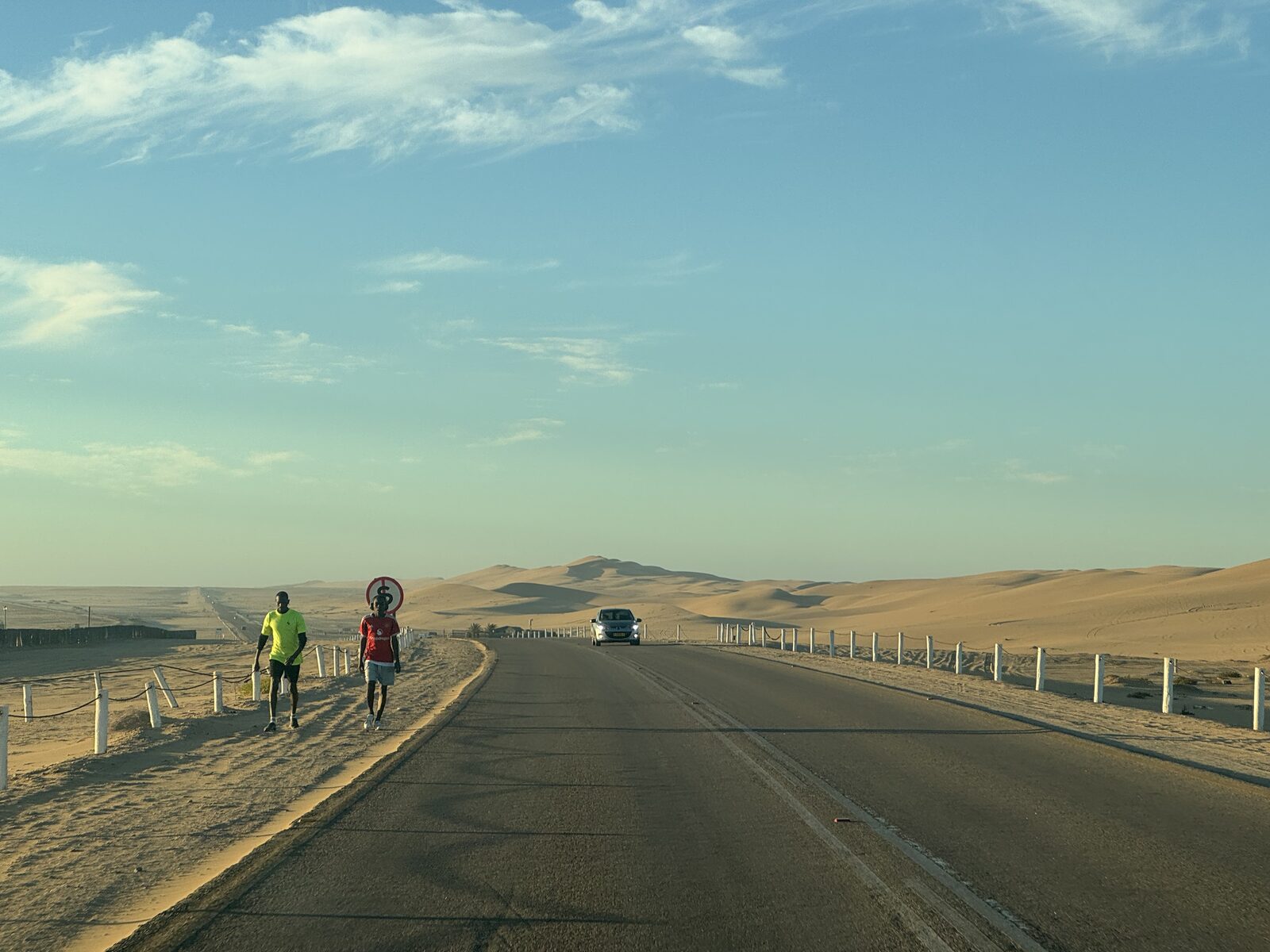
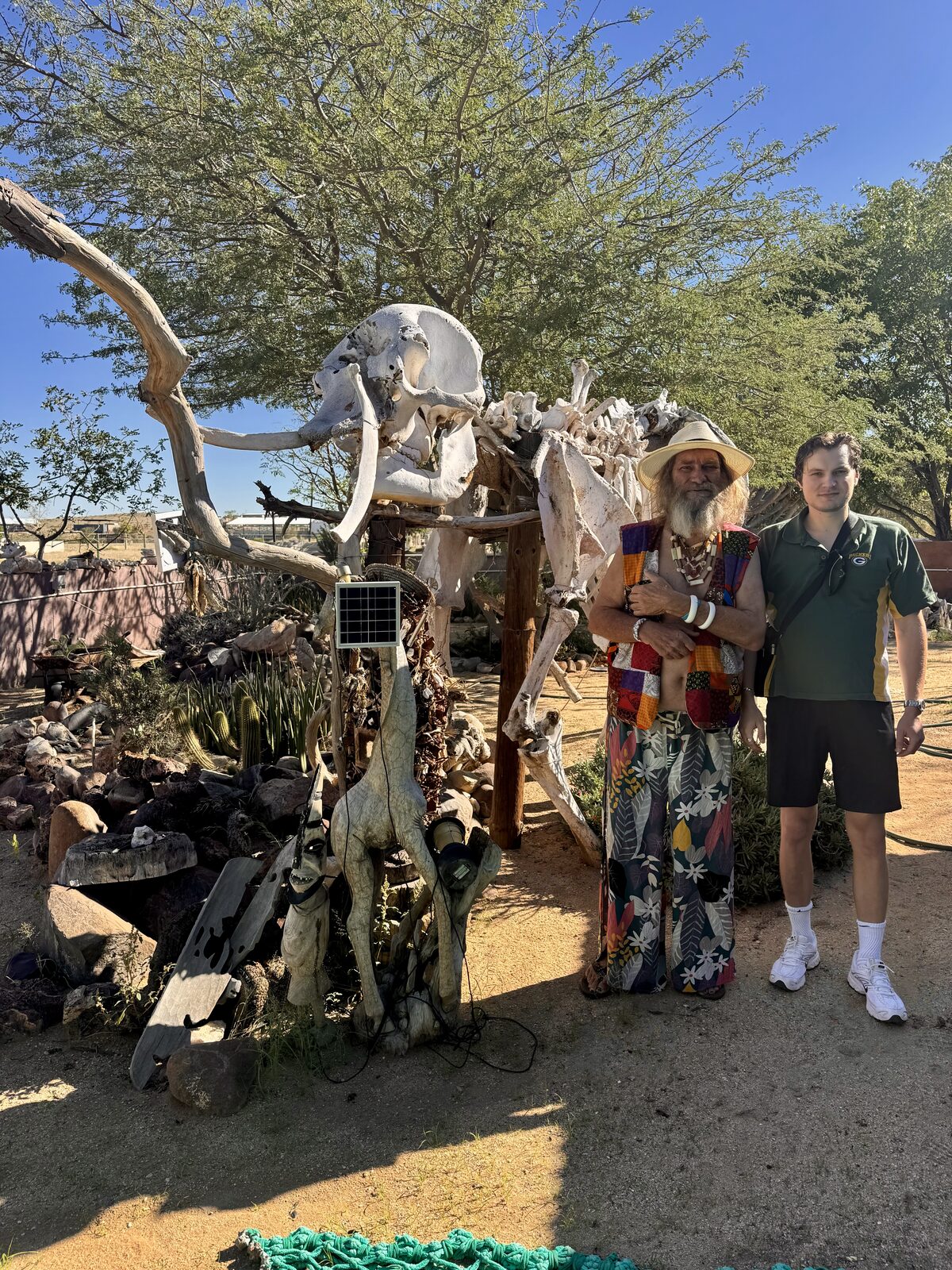
All in all, it was a tremendous trip. My deepest thanks go to Andi, who drove me across the country and generously hosted me at his homes in Swakopmund and Windhoek; to Jaco, who showed me his Tourmaline mine and put us up at his "Bahnhof Hotel"; and to Johan, who parted with the exceptional Aquamarine from his personal collection. A big thanks also goes to Reinhard Bast, who connected me with Andi and recommended him as my guide.
To our TopMin customers: expect to see more Namibian material in our online shop soon.